What NOT to Put in Your Septic Tank (Avoid Costly Repairs)
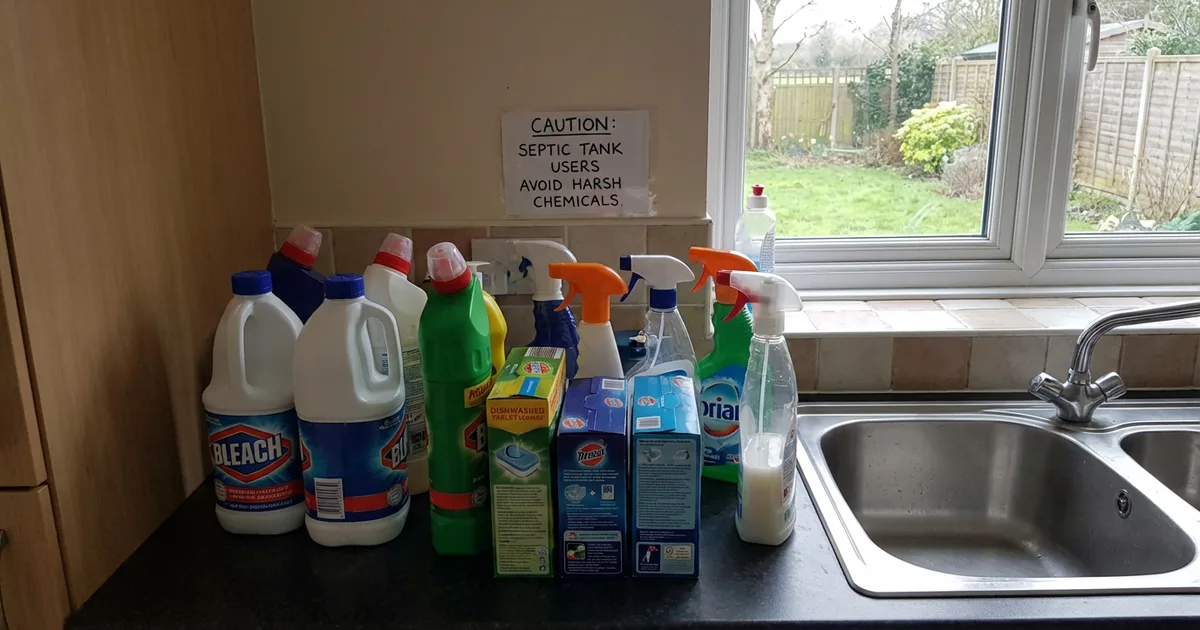
A blocked outlet pipe costs around £300 to fix. Leave the cause untreated and the same problem escalates into a drainage field replacement, a bill that can reach £15,000 or more. In most cases, the cause isn't neglect. It's a pack of "flushable" wipes, a bottle of bleach, and years of tipping cooking oil down the kitchen sink.
The items that damage septic tanks fall into four categories, and each one harms the system in a completely different way. Physical items that never break down. Fats and grease that silently destroy the drainage field. Chemicals that kill the bacteria your tank depends on. And simple water overload that flushes raw sewage into the ground before it's been treated.
This guide covers all four, with the real repair costs attached to each, the specific UK products to avoid, and the safe alternatives you can use instead.
Why What Goes Into Your Septic Tank Matters More Than You Think
Around three million UK homes are not connected to mains sewage. They rely on private drainage, and the septic tank is the most common system. If you're one of them, your entire waste treatment process depends on a colony of naturally occurring bacteria living inside the tank. These bacteria break down solid waste into liquid effluent, which then flows out into a drainage field (soakaway) where the soil filters it before it re-enters the water table.
This process is entirely biological. It works well when left alone. But put the wrong thing down the drain and you either physically block the system, kill the bacteria, or contaminate the drainage field itself.
The financial consequences are steep. Minor septic tank repairs cost £500 to £2,500. A full tank replacement runs £4,000 to £7,000 installed. In worst-case scenarios involving drainage field contamination, ground remediation, and full system replacement, total bills of £12,000 to £25,000 are common. On difficult-access plots, £30,000 or more is possible.
The Environment Agency regulates all private sewage systems under the General Binding Rules, and non-compliance carries unlimited fines. Knowing what not to put in a septic tank is one of the most financially valuable pieces of knowledge you can have as a homeowner.
The items that cause these failures fall into four distinct categories, and they harm the system in four completely different ways.
Physical Blockers: Items That Go In and Never Break Down
These items don't decompose inside a septic tank. They accumulate as solid material, clog the inlet and outlet pipes, and overload the system until it backs up or fails.
Wet wipes are the single most common cause of avoidable septic tank call-outs. This includes baby wipes, antibacterial wipes, makeup wipes, and products labelled "flushable" or "biodegradable." Despite the labelling, these wipes do not disintegrate in water at the speed required. They clump together inside the tank and form dense masses that block pipes.
Sanitary products (tampons, pads, and panty liners) contain plastics in the wings and backing strips that will never break down. They bind with other debris to form blockages that only a professional can remove.
Paper towels and facial tissues are not the same as toilet paper. They are engineered to retain wet strength, which means they hold together in water rather than disintegrating. They accumulate in the tank as unprocessable solids.
Cotton buds are small enough to flush but accumulate into dense mats. Dental floss wraps around other solids and creates tangled obstructions. Hair from showers and baths binds solids together and traps debris in pipes. Cigarette butts contain plastic filters and accumulate as non-degradable waste.
Cat litter, even "biodegradable" varieties, is typically made of clay or silica that clumps solid in water. It causes rapid pipe blockages. Nappies should never be flushed. The bulk material causes immediate tank overload.
Physical blockages are visible. You'll notice the drains slowing down before disaster strikes. The next category is quieter and far more damaging, because by the time you notice symptoms, the drainage field is already compromised.
Fats, Oils, and Grease: The Slow Killer
Fats, oils, and grease (FOG) are the most financially destructive things you can put into a septic tank. Unlike physical blockers that stay in the tank, FOG migrates beyond the tank and into the drainage field, where it coats the soil and prevents effluent absorption. Once the drainage field is contaminated with grease, the field must be replaced. That is where the £12,000 to £25,000 bills originate.
Cooking oil and vegetable oil poured down the sink in small amounts over time accumulate as a thick scum layer on top of the tank. As the scum thickens, it reduces the tank's effective capacity and eventually reaches the outlet pipe, sending grease directly into the drainage field. Butter, lard, and meat fat behave the same way. They solidify when cooled and cause pipe blockages long before they reach the tank.
Food scraps are a major problem that most homeowners underestimate. Putting food waste down the drain is the equivalent of adding four to five extra people's waste into the system. The bacterial colony simply cannot process that volume. Coffee grounds are a particular offender: dense, they do not break down, and they settle to the bottom of the tank as inert sludge.
Food waste disposal units (garburators) are strongly discouraged for any property on a septic tank. These devices grind food into fine particles that overwhelm the bacterial system and rapidly build the FOG layer. If you have a waste disposal unit and a septic tank, stop using it.
If FOG damages the drainage field physically, household chemicals damage what lives inside the tank. Without bacteria, you don't have a functioning septic system at all.
Household Chemicals That Kill Your Septic Tank's Bacteria
The bacteria inside your septic tank are what make it work. Kill them, and solids stop breaking down, the tank fills rapidly, and untreated effluent reaches the drainage field. This is the category where most UK homeowners cause harm without realising it.
Bleach is the most commonly misused product. It kills the bacterial colony your tank depends on. There is no safe way to use bleach regularly with a septic tank. Bleach-based toilet cleaners, disinfectant sprays rinsed down the sink, and bleach drain flushes all destroy the microbial culture that breaks down your waste. Is bleach safe for septic tanks UK? No. If you have a septic tank, stop using bleach.
Antibacterial products, including hand washes and surface cleaners containing triclosan or triclocarban, are persistent compounds. They survive water treatment and continue to suppress microbial activity inside the tank long after they've been rinsed away.
Chemical drain unblockers are acutely dangerous. Products like Domestos Drain Power and Mr Muscle Drain Gel contain caustic soda (sodium hydroxide) or sulphuric acid. These are highly alkaline or acidic and will rapidly destroy the entire bacterial culture in your tank. If you have a blockage between the house and the tank, call a drainage professional. Never use a chemical unblocker.
Jeyes Fluid, a popular UK garden disinfectant, is extremely bactericidal. It is regularly cited by UK septic tank service companies as one of the worst things homeowners put into their systems. Even small amounts washed down an outside drain connected to the septic tank cause significant bacterial die-off.
Paint, white spirit, paint thinners, and varnishes are toxic to bacteria and persist in the drainage field. They can pollute groundwater, which makes them not just harmful but a legal compliance issue under the General Binding Rules.
Medicines and pharmaceuticals, especially antibiotics, are acutely toxic to bacterial communities. Always dispose of unused medicines through a pharmacy take-back scheme, never down the toilet or sink. Petrol, motor oil, and antifreeze are classified as hazardous waste and must never enter any drain, private or mains.
There is one more category that catches rural homeowners by surprise. It has nothing to do with what you put down the drain, and everything to do with how much water you push through the system.
Hydraulic Overload: Too Much Water, Too Fast
A septic tank has a fixed hydraulic capacity. Push too much water through too quickly and untreated effluent is forced out of the outlet before solids have had time to settle. The result is raw sewage entering your drainage field.
Rainwater downpipes connected to the septic system are a common installation error, especially in older properties. Rainwater should always drain to a separate soakaway or surface drain, never the septic tank. A single heavy rainfall event can hydraulically flush the entire tank in hours, pushing untreated waste through the outlet and into the drainage field.
Doing all your laundry on one day is another common cause of hydraulic overload. Running multiple showers, the dishwasher, and the washing machine simultaneously pushes a large volume of water through the tank in a short period. Spreading washing loads through the week rather than doing eight washes on a Sunday significantly reduces hydraulic stress on the system.
Water softener backwash is an overlooked problem. Ion exchange water softeners discharge a brine flush that is high in salt. High-salt brine is toxic to septic tank bacteria. If you have a water softener, it should not be connected to the septic system.
Now for the part most guides skip: what you actually can use.
What You CAN Use: Safe Alternatives
A septic tank doesn't require you to live without cleaning products or modern plumbing. It requires you to choose the right ones. Here is what can go in a septic tank safely.
Toilet paper: Standard single or double-ply toilet paper dissolves quickly and is completely safe. Avoid extra-thick "quilted" varieties and any paper with wet-strength additives. Products labelled "septic-safe" are widely available and dissolve faster than standard options.
Cleaning products: Non-antibacterial, phosphate-free products in moderate quantities are tolerable. Look for products marked "septic safe" or "biodegradable." Liquid cleaners are preferable to heavy powder detergents, as sodium-based powders can alter the pH balance inside the tank. What chemicals are safe for septic tanks UK? Anything that is phosphate-free, non-antibacterial, and used in moderation.
Septic tank treatments: Enzyme and bacterial activator products (such as Envii Septic Klear) add beneficial bacteria to the tank. These are particularly useful after a chemical incident, for example if someone has used bleach or a drain unblocker. They are not a substitute for regular emptying, but they can help re-establish a healthy bacterial culture.
Cooking oil disposal: Cool used cooking oil and dispose of it in the bin, not the sink. Keep a sealed jar or container under the sink for collecting small quantities between bin collections.
The General Binding Rules: Why This Is a Legal Issue
Everything in this article matters for practical reasons. It also matters legally. The General Binding Rules (GBRs) for small sewage discharges came into force in England on 1 January 2015 and were tightened in 2020. Under the GBRs, septic tanks may no longer discharge to a surface watercourse or ditch, only to a drainage field. Homeowners are responsible for keeping the system properly maintained and must not allow it to cause pollution.
The penalty for non-compliance is an unlimited fine from the Environment Agency. Pouring paint, solvents, or motor oil into a septic system isn't just bad for the tank. If it pollutes groundwater or surface water, it is a criminal offence.
There is also a property sale angle. When you sell a property with a septic tank, the buyer's solicitor will check GBR compliance. A blocked drainage field caused by years of grease contamination, or a system that discharges to a ditch, can hold up or collapse a sale entirely. Maintaining your system properly now protects both your home and its resale value.
Find an EA-Registered Emptying Company Near You
The best insurance against a £15,000 drainage field bill is a healthy tank, and a healthy tank starts with what you don't put into it. When it's time for your next empty, use our verified directory to find a registered company in your area.
Search the DirectoryHow to maintain a septic tank comes down to two things: be careful about what goes down the drain, and book regular emptying with an EA-registered septic tank emptying company every one to three years. The items listed in this guide cause real, expensive, and entirely preventable damage. Remove them from your routine and your system will run for decades.