Soakaway Problems: Signs, Causes, and Solutions
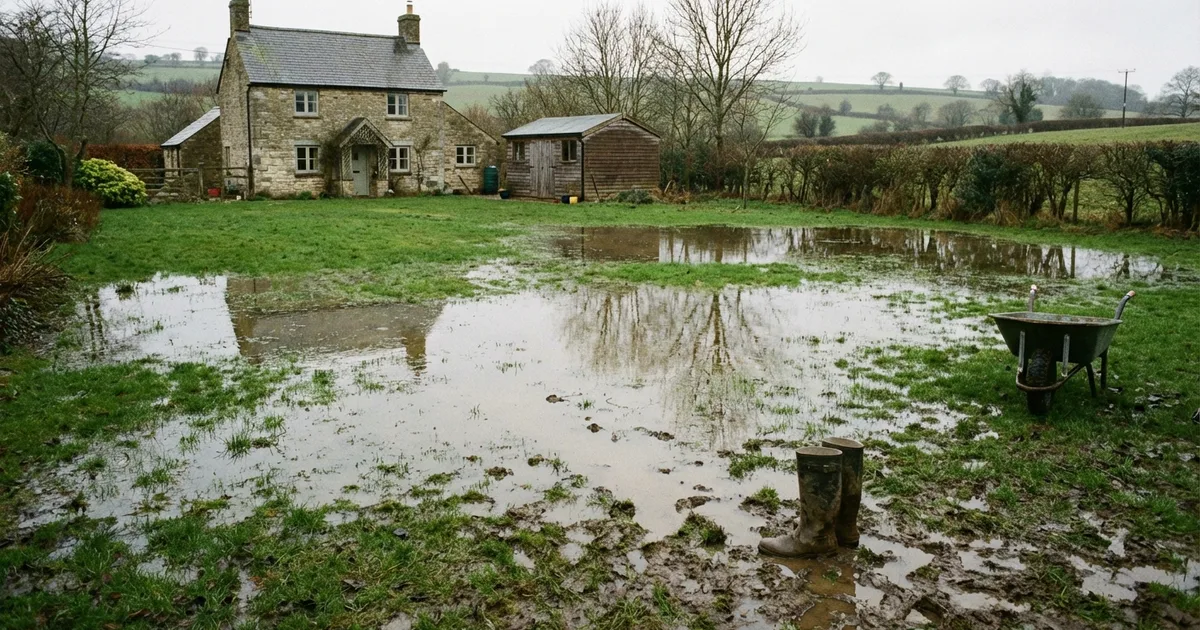
If your soakaway is not working, the cause is almost always upstream. Your garden has turned boggy, your drains are sluggish, and there is a smell you cannot quite place. But here is what most drainage contractors will not tell you upfront: most soakaway problems start at the septic tank, not the soakaway itself.
When a tank is not emptied on schedule, sludge overflows into the drainage field, clogs the pipes and surrounding soil, and kills the field from the inside out. By the time you notice soggy ground or bad smells, the damage is already done. This guide explains how to tell which type of failure you are dealing with, what it will actually cost to fix, and when you genuinely need a professional.
What Does a Soakaway Actually Do?
Two types of soakaway exist and they serve very different purposes. A surface water soakaway handles rainwater only. A septic tank drainage field handles sewage effluent. This post covers the second type, the one connected to your septic tank.
A drainage field disperses treated liquid effluent from your septic tank into the surrounding soil through a network of perforated pipes. The soil acts as a final filter. When it works, effluent soaks away invisibly. When it does not, your entire sewage system backs up with nowhere for the waste to go.
Approximately 1 million UK households rely on off-mains drainage, whether that is a septic tank, cesspit, or sewage treatment plant. If you are one of them, the drainage field is the component most likely to cause problems, and the one most homeowners know the least about.
7 Warning Signs Your Soakaway Is Failing
Not all of these signs are equally serious. The list below runs from the most urgent to the earliest warning. If you spot anything from the top three, call a drainage contractor today.
1. Sewage surfacing on the ground
This is complete failure. Raw or partially treated sewage breaking through the soil surface is a health hazard. It means the drainage field can no longer accept any effluent at all. Stop using water-heavy appliances and get a drainage specialist on site immediately. Do not wait for a convenient appointment. This is same-day urgent.
2. Standing water or boggy ground above the drainage field
The most visible sign. If the area directly over your drainage field is permanently wet, soft underfoot, or pooling after anything more than light rain, the soil is saturated with effluent. The field is either blocked or has failed entirely. Book a CCTV drain survey to confirm which.
3. Slow-draining appliances across the whole property
This is a critical distinction. One slow sink is usually a local blockage. Every bath, sink, and toilet in the house draining slowly at the same time points to a systemic problem downstream, at the drainage field. If the field cannot accept effluent, everything upstream backs up. Start by checking the manhole nearest the tank. If the effluent level is high, the problem is confirmed.
4. Foul odours and gurgling sounds
A rotten-egg smell (hydrogen sulphide) near outdoor manholes, in the garden above the drainage field, or inside the property. Smells that come and go with heavy water usage or rainfall are a strong indicator the drainage field is struggling. Gurgling from toilets is the acoustic version of the same problem: air trapped in the system because effluent cannot drain away fast enough. Both are most noticeable after heavy household water use, such as running the washing machine and dishwasher at the same time.
5. Sinkholes or depressions in the lawn
The soil above the drainage field compacts and subsides as it becomes saturated. Small depressions or soft spots in the lawn, particularly in a line that follows the pipe layout, suggest the field beneath has been waterlogged for some time.
6. Unusually lush, green grass above the drainage field
The early warning most homeowners miss entirely. A strip of grass that is noticeably greener and grows faster than the surrounding lawn is being fertilised by effluent seeping closer to the surface than it should. It looks healthy. It is actually telling you the drainage field is not working properly.
Quick severity guide: Seeing signs 1 to 3? Call a drainage contractor today. Seeing signs 4 to 6? Book a septic tank inspection within the month. The sooner you act, the more likely the fix is a clearing rather than a replacement.
Is Your Soakaway Blocked, Failed, or in the Wrong Soil?
The distinction here matters because it determines everything that follows: the cost, the timeline, and whether the problem is fixable at all.
Blocked soakaway
A blockage usually affects one pipe run or one area of the drainage field. Drainage slows in specific parts of the property rather than everywhere at once. Causes include silt build-up, root invasion from nearby trees, or a collapsed pipe section. Symptoms tend to develop gradually over weeks or months. The good news is that a blockage caught early can often be cleared with high-pressure jetting.
Failed soakaway (biomat failure)
This is the serious one. Drainage problems affect the entire property. Boggy ground is widespread rather than localised. The cause is almost always sludge overflow from a septic tank that was not emptied frequently enough. That sludge clogs the perforated pipes and the biomat layer in the soil around them. Once the biomat fails, jetting will not fix it. The field either needs an extended resting period (if caught early) or full replacement.
Unsuitable soil
Some drainage fields were always going to fail because the soil simply cannot percolate effluent fast enough. This is common in clay-heavy areas. WCI Group, a drainage contractor specialising in off-mains systems, estimates that over 60% of UK land fails the percolation test required for a drainage field. In clay soil, a soakaway can fail in as little as 5 years regardless of how well it is maintained.
Quick test for homeowners: Check multiple appliances and multiple drains throughout the property. If the problem is whole-house, you are almost certainly dealing with a failed or saturated field, not a simple blockage.
Why Soakaways Fail: The 5 Root Causes (One Is Preventable)
Five causes account for the vast majority of drainage field failures. The first two are problems you inherit. The third is the one you could have prevented.
1. Poor original installation
The most common cause of drainage field failure. No percolation test was carried out before installation, the pipes were laid at the wrong gradient, the field was installed too deep, or inappropriate materials were used. If your drainage field was put in during a house build and nobody tested the soil first, it was built to fail.
2. Unsuitable soil
A site problem that cannot be solved by maintenance. Clay-heavy ground does not allow effluent to percolate, and the field gradually waterloggs regardless of what you do. A proper percolation test before installation would have caught this.
3. Infrequent septic tank emptying
This is the most preventable cause, and the one the drainage industry consistently talks around. When a septic tank is not emptied every 1 to 3 years (depending on household size and tank capacity), the sludge layer rises until it overflows into the drainage field. That sludge clogs the perforated pipes and destroys the biomat layer that filters effluent into the soil.
Once this happens, the drainage field cannot simply be unblocked. It needs replacing. The cost of that replacement typically runs from £1,000 to £2,500 or more. A routine septic tank emptying costs £150 to £300. Regular emptying by a registered waste carrier is the cheapest form of soakaway insurance you can buy.
4. Tree root invasion
Roots from nearby trees and large shrubs seek out the moisture and nutrients in drainage pipes. They infiltrate joints and cracks, eventually blocking the pipe entirely. This tends to be localised, affecting one section of the field rather than the whole system. If caught early, it is fixable with pipe repair and root removal.
5. High water table or groundwater saturation
After sustained heavy rainfall or in low-lying areas, the surrounding soil becomes saturated and physically cannot accept more liquid. In some locations this is seasonal. In others, it is permanent, making the site unsuitable for a drainage field at all. There is no maintenance fix for a permanently high water table.
What You Can Check Yourself (and What You Cannot)
Some checks you can do yourself. Others are illegal without a registered professional. Here is the line.
Homeowners can:
- Inspect manholes to check the effluent level in the tank. If the level is high, the tank is either full or the drainage field is blocked.
- Walk the area above the drainage field and look for standing water, boggy patches, or that telltale strip of greener grass.
- Test drainage speed across all appliances simultaneously. Run baths, sinks, and flush toilets at the same time. Whole-house slowdown points to the drainage field.
- Check for odours near the soakaway area and any outdoor manholes or inspection chambers.
Requires a professional:
- CCTV drain survey to locate blockages or confirm field failure.
- High-pressure water jetting to clear physical blockages in the pipes.
- Soil percolation testing, which must comply with BS 6297. Results must fall between Vp 15 and Vp 100 to be suitable for a drainage field.
- Any new drainage field installation or replacement. This must comply with Environment Agency regulations and may require planning permission.
- Septic tank emptying itself. This must legally be carried out by an EA-registered Upper Tier waste carrier. Homeowners cannot legally empty their own septic tank. This is not a grey area or a recommendation. It is the law.
Under the Environment Agency’s General Binding Rules 2020, septic tanks discharging to surface water must be upgraded to a compliant drainage field or sewage treatment plant. If your system is not compliant, you have a legal problem on top of a drainage problem.
Soakaway Problems: Repair Options and Realistic Costs in 2026
Costs depend on whether you need clearing, repair, or full replacement. Here are the actual numbers.
Option 1: Jetting and unblocking (minor blockage)
Cost: £150 to £400 for a professional drainage company. Suitable for silt build-up, debris, or early-stage root intrusion where the pipes are intact. Not suitable for biomat failure or clay soil saturation. If jetting fixes it, you have caught the problem early.
Option 2: Drainage field resting period
If the field is oversaturated but not permanently failed, diverting effluent to a tanker temporarily while the field dries out can allow recovery. You will pay septic tank emptying rates of £150 to £300 per visit during the resting period. This only works if you catch the problem before the biomat layer is destroyed. For a breakdown of what septic tank emptying costs in your area, see our cost guide.
Option 3: Partial repair or pipe replacement
Cost: £500 to £1,500 depending on depth and pipe length. Suitable for localised pipe damage or a single section compromised by root invasion. Not a whole-field solution.
Option 4: Full drainage field replacement
Soakaway replacement cost depends on size and soil conditions:
| Type | Cost Range (2026) |
|---|---|
| Small surface water soakaway (190-litre) | £500 to £650 |
| Medium soakaway (800-litre) | £1,000 to £1,100 |
| Full drainage field for septic tank | £1,000 to £2,500+ |
| Labour | ~£240/day (typically 2 to 3 days) |
| Skip hire / muck-away | £150 to £300 |
| Council planning approval (if required) | £200 to £400 |
There is an important caveat. If the soil fails a percolation test (results outside Vp 15 to 100), a traditional drainage field cannot be installed regardless of your budget. The only legal option at that point may be a sewage treatment plant with an EA permit to discharge to a watercourse, which is a significantly more expensive route.
EA setback distances also constrain where a new drainage field can go: at least 10 metres from any watercourse, 15 metres from any building, and 50 metres from any borehole or spring. On smaller plots, these requirements can rule out a replacement field entirely.
How to Find a Registered Professional for Soakaway Problems
The repair option matters less than the contractor who carries it out. A jetting job done by someone who does not check the biomat condition first is a waste of money. A new drainage field installed without a percolation test is a field built to fail again. Here is what to look for.
For septic tank emptying, which should be your first step before any diagnosis or repair work, the company must be an EA-registered Upper Tier waste carrier. This is a legal requirement for anyone removing controlled waste. It is not a nice-to-have.
For drainage surveys and jetting, look for drainage contractors with CCTV survey capability. Ask for a written report, not just a verbal summary. You will need documentation if the problem escalates to a full replacement.
For new drainage field installations, insist on a contractor who will carry out a soakaway percolation test to BS 6297 standard before any groundworks begin. If they quote without a perc test, walk away. A field installed without testing the soil first is a field built to fail.
Our directory lists only EA-registered emptying specialists, filtered from the full waste carrier register so you do not have to search it yourself.
Red flags to avoid: quotes given over the phone without a site visit, contractors who do not mention a percolation test when quoting for a new drainage field, and anyone who cannot show you their EA registration number when asked.
Your soakaway failing is almost never the real problem. It is a symptom of an under-maintained septic tank, an unsuitable installation, or soil that was never right for the job. Fix the root cause, get your tank emptied on schedule by a registered waste carrier, and the drainage field will do what it was designed to do.
If you need a registered emptying company to start with, or after any drainage work, find an EA-registered septic tank emptying company near you through our directory. Every listing is verified against the official EA waste carrier register.
Find a Registered Emptying Company Near You
Every company in our directory is verified against the official EA waste carrier register. Search by region, county, or city to find a specialist near you.
Search the Directory →