How Much Does Septic Tank Emptying Cost in 2026? (Complete UK Guide)
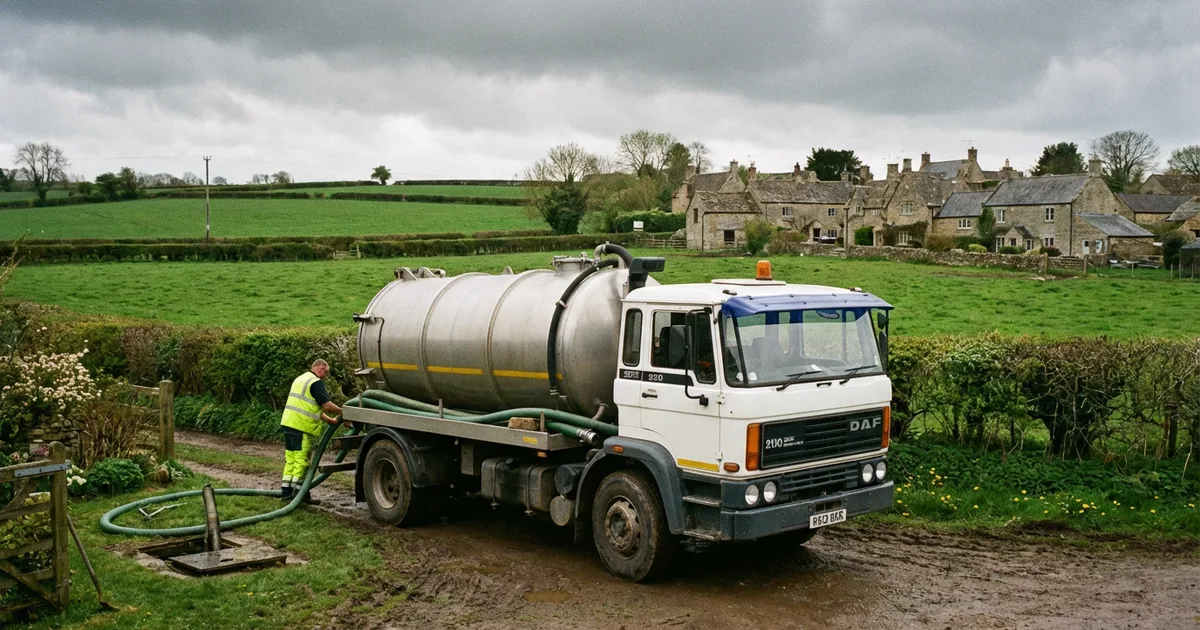
If you have a septic tank, you already know it needs emptying regularly. What you might not know is exactly how much that should cost — and whether you're being overcharged. Prices vary significantly depending on your tank size, where you live, and how easy it is for the tanker to reach your property.
This guide breaks down every cost you're likely to face, from standard domestic tanks to large cesspits, with regional price comparisons and practical tips to keep your bills down.
Septic Tank Emptying Prices at a Glance
Here's what you can expect to pay for septic tank emptying across the UK in 2026:
| Service | Cost Range | Typical Cost |
|---|---|---|
| Small tank (up to 2,700L) | £150–£200 | £175 |
| Standard tank (2,700–4,500L) | £175–£300 | £200 |
| Large tank (4,500–9,000L) | £250–£350 | £300 |
| Very large tank (9,000L+) | £300–£450 | £375 |
| Additional waste (per extra 1,000 gallons) | £80–£120 | £100 |
| Emergency / out-of-hours callout | £250–£500 | £350 |
| Additional labour (per hour) | £50–£60 | £55 |
These prices include the tanker visit, pumping, and legal disposal of the waste at an approved treatment facility. VAT is typically included in quotes from smaller operators but check with your provider.
What Factors Affect the Cost?
Two households five miles apart can pay very different amounts. Here are the main factors that push the price up or down:
1. Tank Size
This is the biggest factor. Most UK homes have tanks between 2,700 and 4,500 litres. If you don't know your tank size, a standard 3-bedroom house typically has a 2,700L or 3,400L tank. Larger rural properties or older homes may have 4,500L tanks or bigger. The larger the tank, the more waste to remove, and the higher the price.
2. Access to the Tank
The vacuum tanker needs to park within roughly 30 metres of your tank and run hoses to reach it. If the tanker can't get close — narrow lanes, locked gates, long driveways, or the tank lid is buried under soil — expect extra labour charges of £50–£100. Some companies charge by the extra metre of hose required.
3. Your Location
Prices in the South East of England are 15–25% higher than in the North or Wales. London and the Home Counties are the most expensive. Rural Scotland and Wales tend to be cheaper, though very remote locations may attract a travel surcharge.
4. Distance from Disposal Site
Waste carriers must transport your waste to a licensed treatment facility. If you live far from the nearest facility, that travel time gets factored into the price. Particularly remote areas in the Highlands, Cornwall, or mid-Wales often see higher charges for this reason.
5. Emptying Frequency
Many companies offer discounts if you book regular scheduled emptyings — typically 10–15% off for annual contracts. If you wait until the tank is overflowing and need an emergency callout, you'll pay a premium.
6. Time of Visit
Weekday, business-hours visits are cheapest. Weekend and bank holiday callouts often carry a surcharge of £50–£100. True emergency callouts (evenings, nights) can cost 50–100% more than the standard rate.
Regional Price Comparison
Septic tank emptying prices vary across the UK. Here's a region-by-region guide for a standard domestic tank (up to 4,500L):
| Region | Typical Cost | Range |
|---|---|---|
| South East England | £230 | £200–£300 |
| London / Home Counties | £250 | £200–£320 |
| South West England | £200 | £170–£260 |
| East of England | £200 | £170–£260 |
| West Midlands | £190 | £160–£250 |
| East Midlands | £185 | £150–£240 |
| North West England | £180 | £150–£230 |
| Yorkshire & the Humber | £175 | £150–£225 |
| North East England | £175 | £150–£220 |
| Wales | £175 | £145–£230 |
| Scotland | £170 | £140–£230 |
Note: Scottish Water provides a free or subsidised de-sludging service for eligible properties in Scotland. Check with Scottish Water directly to see if you qualify before paying a private contractor.
Cesspit Emptying Costs
Cesspits (also called cesspools) are not the same as septic tanks. A cesspit is a sealed underground tank that simply stores waste — it does not treat it. This means cesspits fill up much faster and need emptying far more often, making them significantly more expensive to maintain.
| Cesspit Size | Cost per Emptying | Typical Emptying Frequency |
|---|---|---|
| Small (up to 9,000L) | £200–£350 | Every 4–6 weeks |
| Medium (9,000–18,000L) | £300–£450 | Every 6–10 weeks |
| Large (18,000–24,000L) | £400–£550 | Every 6–12 weeks |
| Very large (24,000L+) | £500–£650 | Every 8–12 weeks |
The annual cost of cesspit emptying is eye-opening. A typical 3-bedroom household with a 18,000L cesspit might need 6–8 emptyings per year, costing £2,400–£3,600 annually. If you're spending this much, it's worth investigating whether you can convert to a septic tank or a sewage treatment plant, which would dramatically reduce ongoing costs.
How to Save Money on Septic Tank Emptying
There are several practical steps you can take to keep your emptying costs as low as possible:
- Book regular scheduled emptyings. Most companies offer 10–15% discounts for annual contracts or pre-booked visits. You'll also avoid emergency callout premiums.
- Get three quotes. Prices vary significantly between providers, even in the same area. Always get at least three written quotes and check that each company is an EA-registered waste carrier.
- Share with neighbours. If you live in a rural area with nearby properties that also have septic tanks, ask your contractor about multi-property discounts. Having the tanker visit several tanks on the same trip saves them fuel and time, and they'll often pass on a discount of £20–£50 per property.
- Maintain easy access. Keep the route to your tank clear and make sure the inspection cover is accessible and not buried. Difficult access adds time and labour charges.
- Reduce water usage. The less water going into your tank, the slower it fills. Fix dripping taps, use water-efficient appliances, and avoid running the washing machine multiple times a day.
- Avoid flushing harmful items. Wet wipes, cooking fat, sanitary products, and harsh chemicals all disrupt the bacterial breakdown in your tank, causing it to fill faster and potentially needing more frequent emptying.
- Consider a sewage treatment plant. If your cesspit costs are spiralling, a modern sewage treatment plant (£3,000–£6,000 installed) pays for itself within 1–3 years through dramatically lower maintenance costs.
How Often Does a Septic Tank Need Emptying?
The frequency depends on your household size and tank capacity:
| Household Size | Tank Size | Recommended Frequency |
|---|---|---|
| 1–2 people | 2,700L | Every 2–3 years |
| 3–4 people | 2,700–3,400L | Every 12–18 months |
| 4–5 people | 3,400–4,500L | Every 12 months |
| 5+ people | 4,500L+ | Every 6–12 months |
These are guidelines, not hard rules. If you notice slow drains, bad smells around the tank, or pooling water over the soakaway, your tank may need emptying sooner. Leaving a full tank too long risks sewage backing up into your property or contaminating local watercourses — which can result in prosecution by the Environment Agency.
The general rule of thumb: never let sludge build up beyond one-third of your tank's depth. Most professionals can check this during a routine service visit.
Frequently Asked Questions
How much does it cost to empty a septic tank in the UK?
Most UK homeowners pay between £150 and £300 to empty a standard domestic septic tank (up to 4,500 litres) in 2026. The exact cost depends on your tank size, location, and ease of access. Larger tanks of 9,000 litres or more typically cost £300–£450.
How much does cesspit emptying cost?
Cesspit emptying costs more than septic tank emptying because cesspits hold all waste without treating it. A typical cesspit emptying costs £200–£400 per visit. A large 18,000-litre cesspit costs £350–£500 per emptying, and a full-size 24,000-litre cesspit can cost £500–£600 or more.
How often does a septic tank need emptying?
Most domestic septic tanks need emptying every 12 to 24 months. A household of 1–2 people can often wait 18–24 months, while families of 4 or more may need emptying annually. Cesspits need emptying far more frequently — often every 4–8 weeks depending on household size and tank capacity.
Is septic tank emptying more expensive in the South East?
Yes. Septic tank emptying in the South East and London typically costs 15–25% more than in the North or Wales. A standard emptying that costs £175 in Yorkshire might cost £220–£250 in Surrey or Kent. This reflects higher labour, fuel, and disposal costs in the South East.
Can I empty my septic tank myself?
No. UK law requires that septic tank waste is collected and disposed of by an Environment Agency registered waste carrier. DIY emptying is illegal and carries fines of up to £50,000. You must use a company with a valid Upper Tier waste carrier registration from the EA.
Find a Registered Septic Tank Company Near You
Every company in our directory is verified against the official EA Waste Carrier Register. Search 275 registered companies across the UK.
Search the Directory