How Often Should You Empty Your Septic Tank? (UK Guide)
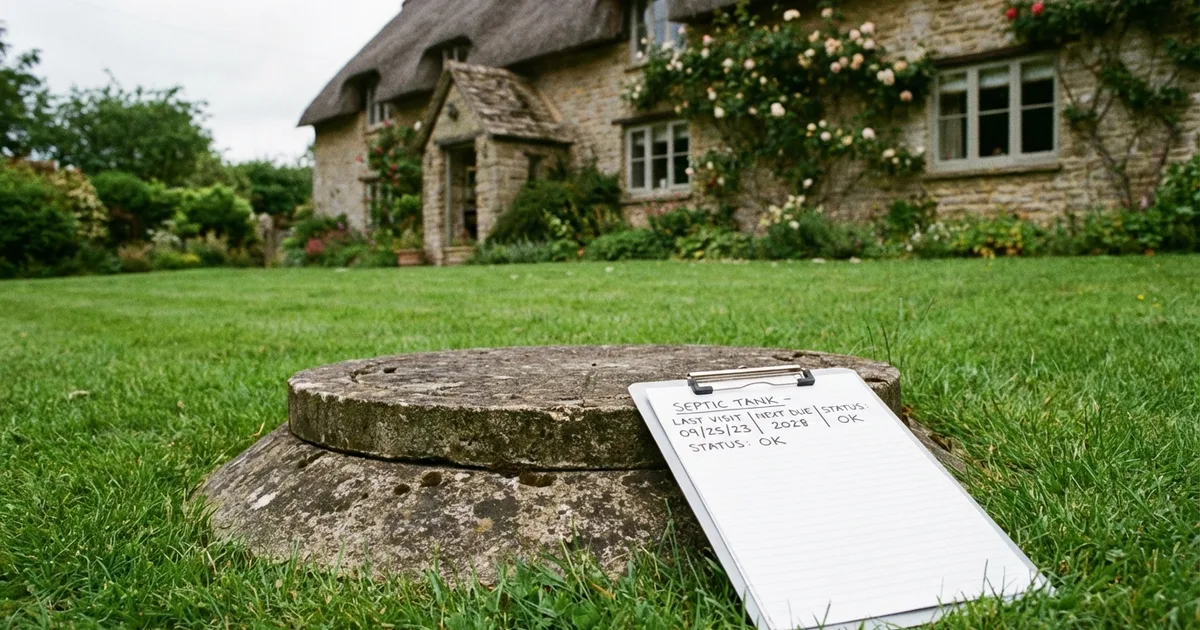
If you live in a rural property with off-mains drainage, keeping on top of your septic tank emptying schedule is one of the most important maintenance jobs you have. Leave it too long and you risk blocked drains, foul smells, a damaged soakaway, and potentially a costly replacement — not to mention trouble with the Environment Agency.
This guide covers everything UK homeowners need to know about septic tank emptying frequency, including how household size and tank capacity affect the schedule, when cesspits and sewage treatment plants need emptying, the warning signs that your tank is overdue, and what the law says about maintenance.
Quick Reference: Emptying Frequency by System Type
The table below gives a practical overview of how often each type of off-mains drainage system needs emptying. Use it as a starting point, then read the sections below for the detail.
| System Type | 1-2 People | 3-4 People | 5+ People |
|---|---|---|---|
| Septic tank (standard) | Every 2-3 years | Every 1-2 years | Every 12 months |
| Septic tank (small, under 2,700L) | Every 12-18 months | Every 6-12 months | Every 6 months |
| Cesspit / cesspool | Every 6-8 weeks | Every 4-6 weeks | Every 3-4 weeks |
| Sewage treatment plant | Every 18-24 months | Every 12-18 months | Every 12 months |
Important: The Environment Agency's General Binding Rules state that you must have your septic tank desludged before it goes beyond maximum capacity, and you should do this at least once a year or in line with the manufacturer's instructions — whichever is more frequent.
Factors That Affect Septic Tank Emptying Frequency
The "once a year" rule from the EA is a safe minimum, but several factors determine exactly how often your septic tank should be emptied.
Household size
This is the single biggest factor. More people means more wastewater flowing into the tank every day. A couple living in a rural cottage will fill their tank far more slowly than a family of five. As a rough guide, each person generates about 150 litres of wastewater per day, so a family of four produces around 600 litres daily.
Tank size
Most domestic septic tanks in the UK hold between 2,700 and 4,500 litres, with some larger systems reaching 5,700 litres or more. A bigger tank takes longer to fill, which means less frequent emptying. If you are not sure what size your tank is, a professional can measure it during a routine empty.
Water usage habits
Long showers, daily baths, frequent washing machine loads, and regular dishwasher use all increase the volume of water entering your tank. Power showers and high-flow taps are particularly heavy on septic systems. If your household uses a lot of water, you will need to empty more often than the averages suggest.
What goes down the drain
Septic tanks rely on natural bacterial action to break down solids. Pouring bleach, antibacterial cleaners, cooking fat, nappies, wet wipes, or sanitary products down the drain disrupts this process and causes sludge to build up faster. Stick to septic-safe cleaning products and never flush anything other than toilet paper.
Age and condition of the system
Older tanks, particularly those built before modern building regulations, may be undersized for today's water usage patterns. Damaged baffles or cracked tanks can also reduce effective capacity. If your tank is more than 20 years old, an annual inspection is strongly recommended alongside your regular empty.
Season and weather
Heavy rainfall can saturate the ground around your soakaway (drainage field), reducing its ability to disperse effluent. During wet winters, some homeowners find their tanks fill more quickly because the soakaway cannot cope with the additional load. Consider scheduling your annual empty before the wet season starts — September or October is ideal.
Cesspit Emptying Frequency
A cesspit (also called a cesspool) is fundamentally different from a septic tank. Where a septic tank treats wastewater and discharges the liquid effluent to a soakaway, a cesspit is simply a sealed holding tank with no outlet. Everything that goes in stays in until it is pumped out.
Because cesspits store all wastewater rather than treating and dispersing it, they fill up much faster and need emptying far more often — typically every 4 to 8 weeks for an average household. A family of four or more may need emptying every 3 to 4 weeks.
At a typical cost of £200 to £400 per empty, cesspits are expensive to run. Annual running costs can easily reach £2,500 to £5,000. If you have a cesspit, it is often worth investigating whether you can switch to a septic tank or sewage treatment plant to reduce ongoing costs.
Under UK law, cesspits must not be allowed to overflow. You are required to keep records of every emptying and the waste carrier who performed it, as these can be requested by the Environment Agency at any time.
Sewage Treatment Plant Desludging Frequency
Sewage treatment plants (also called package treatment plants) use mechanical or biological processes to treat wastewater to a much higher standard than a septic tank. Popular brands in the UK include Klargester, Marsh, Conder, and Graf.
Because they break down waste more efficiently, sewage treatment plants need emptying less often than septic tanks — typically every 12 to 24 months, depending on the model and household size. Some modern systems can stretch to every 2 years between desludges.
However, treatment plants do need annual servicing to keep the mechanical and electrical components running properly. Most manufacturers require an annual service contract to maintain the warranty. Check your specific model's manual for the recommended desludging and service schedule.
5 Signs Your Septic Tank Needs Emptying Now
Do not wait for a scheduled date if you notice any of these warning signs. They indicate your tank is at or near capacity and needs immediate attention.
- Slow-draining sinks, baths, and toilets. If water is draining noticeably slower than usual throughout the house (not just one fitting), your tank is likely full. This is usually the earliest and most reliable warning sign.
- Foul sewage smell outside. A strong smell around the tank or the drainage field area means the system is struggling. If the smell reaches indoors — particularly around ground-floor drains — the situation is urgent.
- Soggy ground or unusually lush grass near the tank. Wet, marshy patches or a suspiciously green strip of lawn over your soakaway mean that untreated effluent is being forced to the surface because the tank is overfull or the soakaway is saturated.
- Gurgling sounds from drains and pipes. Gurgling or bubbling noises when you flush the toilet or run a tap often indicate a full tank or a blockage between the house and the tank.
- Sewage backing up into the house. This is the worst-case scenario. If sewage is coming back up through toilets, showers, or floor drains, stop using all water immediately and call an emergency emptying service. This is a health hazard and must be dealt with the same day.
What Happens If You Skip Emptying?
Ignoring your septic tank emptying schedule is a false economy. Here is what can go wrong — and what it could cost you.
Soakaway failure
When a tank overfills, solid waste and sludge get carried into the drainage field. This clogs the soakaway pipes and surrounding gravel, eventually destroying the field's ability to disperse water. Replacing a soakaway costs £3,000 to £8,000 or more, and the disruption to your garden is significant.
Environmental pollution
A failing septic system can release harmful bacteria, nitrates, and phosphates into groundwater and nearby watercourses. This is particularly serious if you live near a private water supply, a well, or a watercourse that feeds into a protected habitat.
Environment Agency enforcement
Under the General Binding Rules, you are legally responsible for maintaining your septic system so that it does not cause pollution. The Environment Agency can issue enforcement notices, require you to upgrade or replace your system, and in serious cases, prosecute. Fines for water pollution offences can be unlimited.
Property sale complications
If you sell your home, the buyer's surveyor and conveyancer will check that your drainage system is compliant. A poorly maintained septic tank with no emptying records can delay or derail a sale, and you may be required to upgrade the system before completion — at your expense.
Legal Requirements: General Binding Rules
Since January 2015, most domestic septic tanks and small sewage treatment plants in England have been regulated under the General Binding Rules rather than individual permits. Here is what the rules require:
- Desludge regularly. You must have your tank emptied before it reaches capacity — at least once a year, or more frequently if the manufacturer specifies.
- Use a registered waste carrier. The company that empties your tank must hold a valid Environment Agency waste carrier registration. Ask for their registration number and keep a copy.
- No discharge to watercourses. Septic tanks must not discharge directly into a river, stream, ditch, or any surface water. If yours does, you are required to install a drainage field or upgrade to a sewage treatment plant.
- Connect to mains if available. If there is a public foul sewer within 30 metres of your property boundary, you cannot use a septic tank — you must connect to the mains.
- Keep records. While not explicitly mandated as a separate requirement, keeping emptying receipts is strongly recommended as evidence of compliance. The EA can ask to see proof of maintenance at any time.
In Scotland, SEPA (the Scottish Environment Protection Agency) regulates private drainage under a separate but similar framework. In Wales, Natural Resources Wales applies equivalent rules. Northern Ireland has its own regulations through the Northern Ireland Environment Agency.
Frequently Asked Questions
How much does it cost to empty a septic tank in the UK?
Septic tank emptying typically costs between £150 and £300, depending on your location, tank size, and accessibility. Larger tanks or difficult access (long hose runs, narrow lanes) will push costs toward the higher end. Cesspits cost more — expect £200 to £400 per visit because of their larger volume.
Can I empty my septic tank myself?
No. Under UK law, septic tank sludge is classified as controlled waste and must be removed by an Environment Agency registered waste carrier. They must transport it to a licensed disposal facility. Emptying it yourself and disposing of the waste — for example, spreading it on land — is illegal and can result in prosecution and fines.
Do sewage treatment plants need emptying as often as septic tanks?
No. Sewage treatment plants break down waste more efficiently and typically need desludging every 12 to 24 months. Some modern systems can go up to 2 years between empties. Always follow the manufacturer's service schedule, and have the plant serviced annually to keep the mechanical components working properly.
What are the legal requirements for septic tank maintenance in England?
Under the General Binding Rules, you must: have your tank desludged before it exceeds capacity (at least annually); use only an EA-registered waste carrier for emptying; not discharge septic tank effluent directly into a watercourse; connect to the mains sewer if one exists within 30 metres of your property boundary; and maintain the system so it does not cause pollution. Failure to comply can result in enforcement action and unlimited fines.
Find a Registered Emptying Company Near You
Every company in our directory is verified against the official EA waste carrier register. Search by region, county, or city.
Browse 275 Verified Companies →